Biddeford's Pepperell Mill Has One Address and Three Different HOAs
October 1, 2026
October 1, 2026
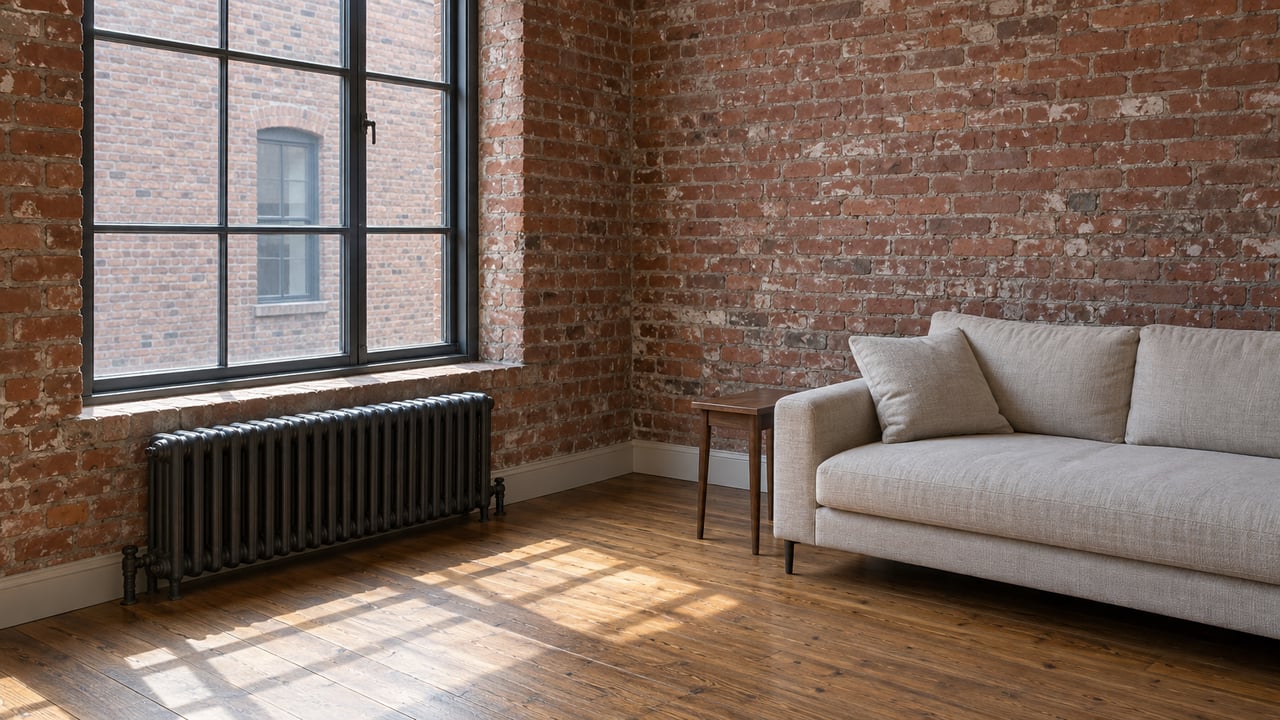
Walk into any unit at the Pepperell Mill in Biddeford and the listing will tell you about the exposed brick, the maple floors, the ceiling height. A key detail is which of the three separate condo associations governs your unit: reserve funds, assessment histories, and special assessments are association-specific.
The Pepperell Mill conversion covers four buildings, known internally as 15, 17, 18, and 35, sitting across three separate associations. A buyer comparing two units at the same complex, sometimes in the same hallway, can be comparing two financially unrelated buildings that happen to share a mailing address and a riverwalk.
Buildings 17 and 35 share a name from their textile days, the Spinning House, a reference to the spinning process that came after the carding stage. Building 15 carries its own name, the Carding House. Building 18 rounds out the four. The mill complex itself dates to 1845 and was first converted from manufacturing to residential use in 2008 by local developer Doug Sanford, before Dallas-based Presidium bought the property in December 2021.
Each of the four buildings falls under one of three associations, which means the declaration, the bylaws, the reserve study, and the assessment history you request from a seller apply only to that specific building's association, not to the mill campus as a whole. A healthy reserve fund in Building 15 says nothing about the reserve position in Building 17. A recent special assessment in one association has no bearing on another. Any comparison a buyer makes across units needs to start with confirming which association a given unit actually belongs to, not assuming the whole campus operates as one entity.
When Pepperell Mill Progression LLC, the entity overseeing the conversion, first priced the 154 units heading to market in the fall of 2024, general manager Megan Higgins put the median target price at $441,888, with units starting at $202,000 and 64 percent priced under $500,000. At that same council meeting, a realtor working with Presidium noted that York County's condo median that September sat at $515,000, and Biddeford's citywide condo median was $500,000. The original conversion pricing was set below both benchmarks, a discount built specifically for the building's existing tenants.
That discount came with terms that don't carry over to today's open-market buyer. Tenants who chose to purchase their own unit got it at an off-market price without competing against the general public, plus a 3.5 percent credit toward closing costs, plus access to a 90 percent mortgage product that Presidium arranged specifically with Androscoggin Bank for this conversion. None of those three things apply if you're buying a Pepperell Mill unit today as a resale.
What you're actually pricing against now looks different. As of late September 2026, listings inside the Pepperell Mill Campus itself run to a median around $505,000, while the broader Biddeford Downtown Mill District, which includes Pepperell alongside other downtown mill and condo inventory, carries a median closer to $420,000. Units specifically inside the mill campus also tend to sit on the market longer, roughly 82 days versus about 24 days for the wider district over that same window. That gap is worth sitting with. It suggests campus units aren't moving on price alone. Larger, more distinctive floor plans, penthouse-scale units, and the mix of one building's inventory against another's are all folded into that single "campus" number, and a buyer using it as a flat benchmark for any specific unit is comparing themselves to an average that may not resemble their unit at all.
The pricing structure exists because of a real fight at Biddeford City Hall. In October 2024, the city council passed an emergency six-month moratorium on condo conversions, as the Portland Press Herald reported, worried that converting 154 rental units at once would tighten an already strained housing market. Council President Liam LaFountain argued at the time that the conversion wasn't creating any new housing, only making existing units less attainable for current residents. The vote passed 6 to 2.
Three weeks later, the council carved out an exception specifically for Buildings 15, 17, 18, and 35, as Saco Bay News reported, after Presidium partner Chris Rhoades and the city negotiated a set of tenant protections. Those protections are why the pricing structure looks the way it does: according to the City of Biddeford, tenants who didn't want to buy got the right to keep renting for up to three years, rent increases capped at 5 percent annually during that window, 180 days notice before any move-out tied to the conversion, and cash relocation assistance for anyone who left. Mayor Martin Grohman signed off on the arrangement as a way to protect residents while still letting the ownership conversion move forward.
That three-year rental runway matters to a buyer today for a specific reason. It means some units inside these same buildings can still be occupied by long-term renters rather than owners, even as neighboring units in the same building sell to owner-occupants. A building still working through that transition can carry a higher share of renter-occupied units than a typical established condo building, and that ratio is something conventional lenders look at closely when underwriting a mortgage on any individual unit inside the association. Asking a seller directly what share of their specific building is owner-occupied versus rented is a more useful question than asking about the mill campus in general.
The picture gets more complicated because the broader Pepperell campus isn't standing still while these four buildings convert. The city separately approved 76 additional apartment units in Building 11, previously slated to become available in 2025, and Presidium has outlined further plans for new apartment construction in Buildings 19 and 20. That means the same 17-acre campus is simultaneously adding rental supply in some buildings while converting existing rental supply to ownership in others.
For a buyer thinking about resale value five or ten years out, that's not a footnote. The owner-to-renter balance across the full campus is a moving number, shaped by decisions happening in buildings that aren't the one you're buying into. It's a reasonable thing to ask a listing agent or the association directly: not just what the ratio looks like today, but whether anything is currently planned that would shift it.
The $31 million refinance that funded the Building 15/17/18/35 conversion came through Miami-based GenX Capital Partners and Beverly Hills-based Tryperion Holdings, according to Mainebiz's reporting on the deal. That's institutional capital behind a project still working through a multi-year rollout, which is worth knowing going in, since Maine's Condominium Act gives a project's original developer, called the declarant, certain control rights over the association until a set share of units has sold. A buyer should ask, plainly, whether the association they're joining is still under declarant control or has transitioned to full owner control, since that affects who's currently setting the budget and calling votes on the reserve fund.
A few questions are specific enough to this property that a general condo checklist won't surface them on its own.
These questions reflect how this particular conversion was structured and negotiated.
Does the mill campus's age affect insurance for individual units? The complex was built in 1845 and renovated in 2008. Older masonry construction with a documented renovation history is something any buyer's insurance agent will want details on, including what work was done during the 2008 renovation and what, if anything, has been updated since.
Will more units convert to condos beyond these four buildings? The city's 2024 moratorium was imposed on other conversion projects of eight or more units in the downtown district, as Mainebiz reported, separate from the four-building exception described above. Any future conversion elsewhere in Biddeford's mill district would need its own approval.
Is the tenant purchase window still open? The negotiated terms, including the off-market pricing and the 90 percent mortgage program through Androscoggin Bank, were built around the original 2024 tenant population of the four buildings. A buyer coming in today as a resale purchaser is not eligible for those specific terms.
A mill conversion like this one rewards a buyer who reads past the finishes and asks about the paperwork specific to their building. If you're weighing a unit at Pepperell Mill, or trying to figure out how it stacks up against other Biddeford inventory, Freeman Group can walk through the actual association documents with you before you write an offer.
This article is general information, not legal, tax or financial advice. Consult a qualified professional about your situation.
Stay up to date on the latest real estate trends.


With more than 27 years in Maine real estate, Shawn Losier offers the experience, insight, and local knowledge clients need to navigate today’s market with confidence. As the Designated Broker of Freeman Group and a respected industry leader, he provides personalized guidance and strategic expertise to help buyers and sellers achieve exceptional results.